Basic Japanese Words on Positions, Locations, and Direction
A simple guide with flashcards to learn and remember the Nihongo vocabulary for positions, locations, directions and navigation.
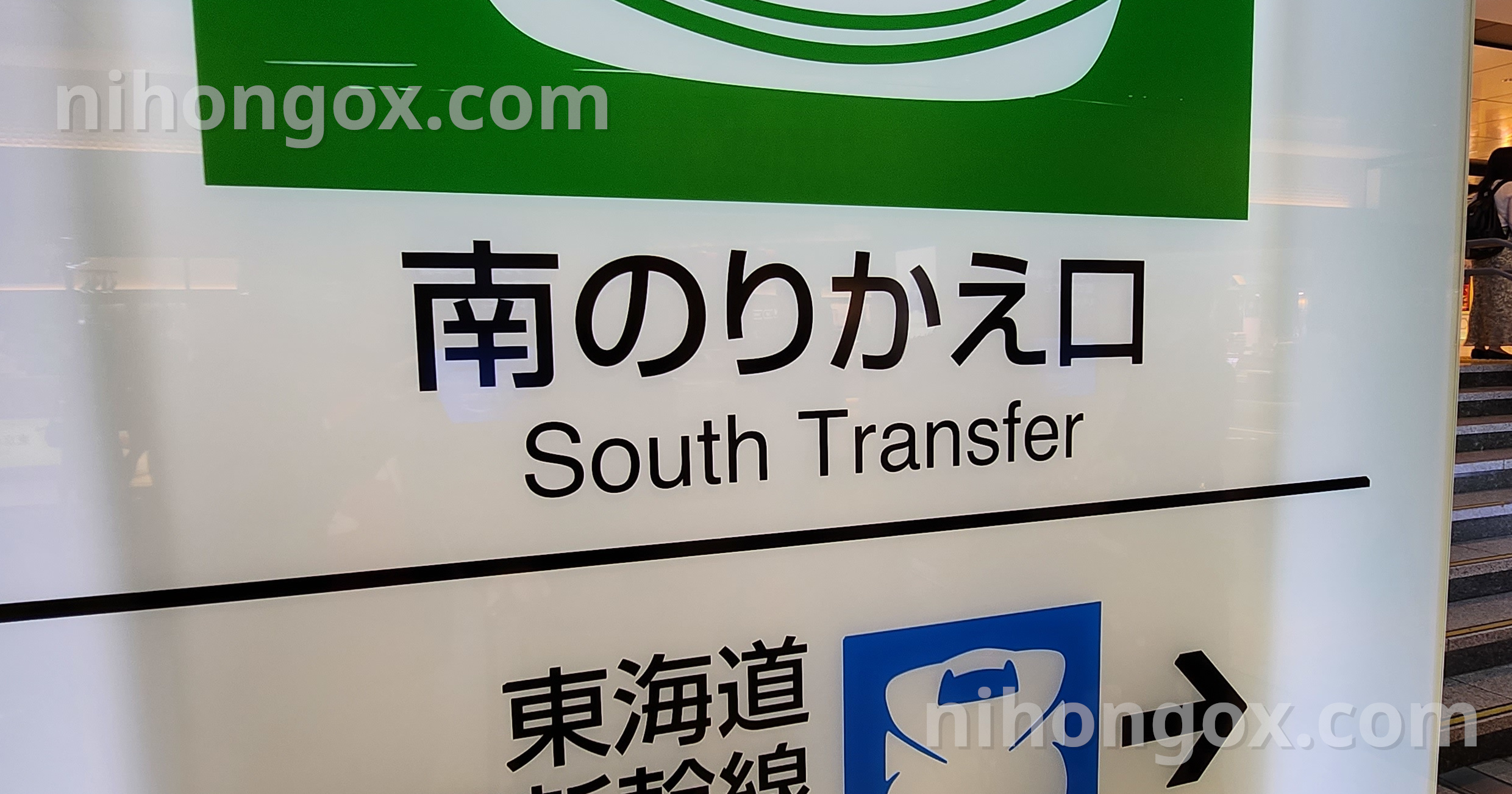
Have you been lost before in Tokyo train stations? Understanding some of the basic Japanese writings can help a lot in navigating the crowded and busy places in Japan. In trains for example, we often look for exits or gates labeled in their canonical direction like south, east, north or west. In the image above which I took in Tokyo Station, you will see the sign that says 南のりかえ口. Do you recognize the first Kanji character 南? The translation below gives the answer and it means “south” or “minami”. Of course you can just look for the English translations but sometimes, especially in remote areas, there are no translations. Also, the translations are in smaller font so from a far it is hard to see and you might miss them.
In this guide, I’ve compiled essential words for describing where things are in terms of locations or positions and how to get to places. The focus is to recognize these words and remember them through the flash card deck provided after each set. But first, let’s try a quick practice of the canonical or map directions of south, east, north and west.
Quick Practice - South, East, North, and West
Flip the cards below and test your understanding.
Now, try the other vocabulary charts then click link after each chart to try their corresponding flashcards.
Basic Positions
These are the most fundamental words you’ll use to describe locations.
| Kanji | Hiragana | Romaji | English |
|---|---|---|---|
| 左 | ひだり | hidari | left |
| 右 | みぎ | migi | right |
| 前 | まえ | mae | front / in front of |
| 後ろ | うしろ | ushiro | back / behind |
| 上 | うえ | ue | above / on top |
| 下 | した | shita | below / under |
Review these basics with the Basic Positions deck.
Relative Locations
Use these words to describe the relationship between two objects.
| Kanji | Hiragana | Romaji | English |
|---|---|---|---|
| 中 | なか | naka | inside |
| 外 | そと | soto | outside |
| 横 | よこ | yoko | beside / side |
| 隣 | となり | tonari | next to |
| 間 | あいだ | aida | between |
| 向かい | むかい | mukai | opposite side / across from |
Practice these in the Relative Locations set.
Cardinal Directions
Essential for map reading and navigating entrances, exits and gates in train stations.
| Kanji | Hiragana | Romaji | English |
|---|---|---|---|
| 北 | きた | kita | North |
| 南 | みなみ | minami | South |
| 東 | ひがし | higashi | East |
| 西 | にし | nishi | West |
Don’t lose your way! Try the Cardinal Directions deck.
Navigation
When someone is giving you directions, these are the verbs and adverbs you’ll likely hear.
| Kanji | Hiragana | Romaji | English |
|---|---|---|---|
| まっすぐ | まっすぐ | massugu | straight ahead |
| 曲がる | まがる | magaru | to turn |
| 止まる | とまる | tomaru | to stop |
| 渡る | わたる | wataru | to cross |
Test your navigation skills with the Navigation flashcards.
Movement Verbs
These common verbs are used to describe the act of moving from one place to another.
| Kanji | Hiragana | Romaji | English |
|---|---|---|---|
| 行く | いく | iku | to go |
| 来る | くる | kuru | to come |
| 帰る | かえる | kaeru | to return / go home |
| 入る | はいる | hairu | to enter |
| 出る | でる | deru | to exit / leave |
Master these essential actions in the Movement Verbs deck.
Useful Examples
Here are some example sentences to see how these words are used in context:
- まっすぐ行って、右に曲がってください。 (Massugu itte, migi ni magatte kudasai.) - Go straight and please turn right.
- 駅の前にあります。 (Eki no mae ni arimasu.) - It is in front of the station.
- 猫は箱の中にいます。 (Neko wa hako no naka ni imasu.) - The cat is inside the box.
- 道を渡ると、左側にデパートが見えます。 (Michi o wataru to, hidarigawa ni depaato ga miemasu.) - If you cross the street, you will see a department store on the left side.
- 北に向かって歩きます。 (Kita ni mukatte arukimasu.) - Walk towards the North.
Check out the full Directions category for more practice.